The Nairobi City Marathon is Kenya's premier city race, a sold-out event that draws thousands of runners every June: closed roads, medals, and enough Instagram content to last a month. I signed up two months before registration officially opened. I trained by walking. Then I ran 10 kilometres. Here is the honest version.
The Confidence That Got Me Here
Let me give you some context.
Since February 2026, I have been walking consistently. 10,000 steps a day, every day. My method is simple: one solid hour outdoors, which gets me to about 7,500 steps and roughly 5 kilometres, and then I collect the remaining 2,500 steps through short walks scattered across my day. It sounds modest. But my Fitbit says I average 11,000 steps this year, so clearly it is working.
In March, I did my first-ever community race. It was called Run for the Bibless, a 5KM walk and 10KM run. I will be honest with you: I walked the entire 10KM. It felt like a walk in the park. I finished it and felt almost nothing by way of effort. I went to bed that night fully expecting to wake up sore. I did not. In fact, the next morning, I clocked 12,000 steps without thinking twice about it. And that feeling, that quiet confidence, planted a seed.
I started watching the Nairobi City Marathon posts on Instagram differently. Not as a spectator anymore. As someone who thought: I could do that. So I signed up. Two months before registration officially opened. And it served me well, because two weeks after registration opened, the race sold out. I personally know people who had trained for months but never got around to registering and were locked out completely.
I was in. I had my walking base. I had my 5KM under my belt. I thought I was ready.
I was not.

Race Morning
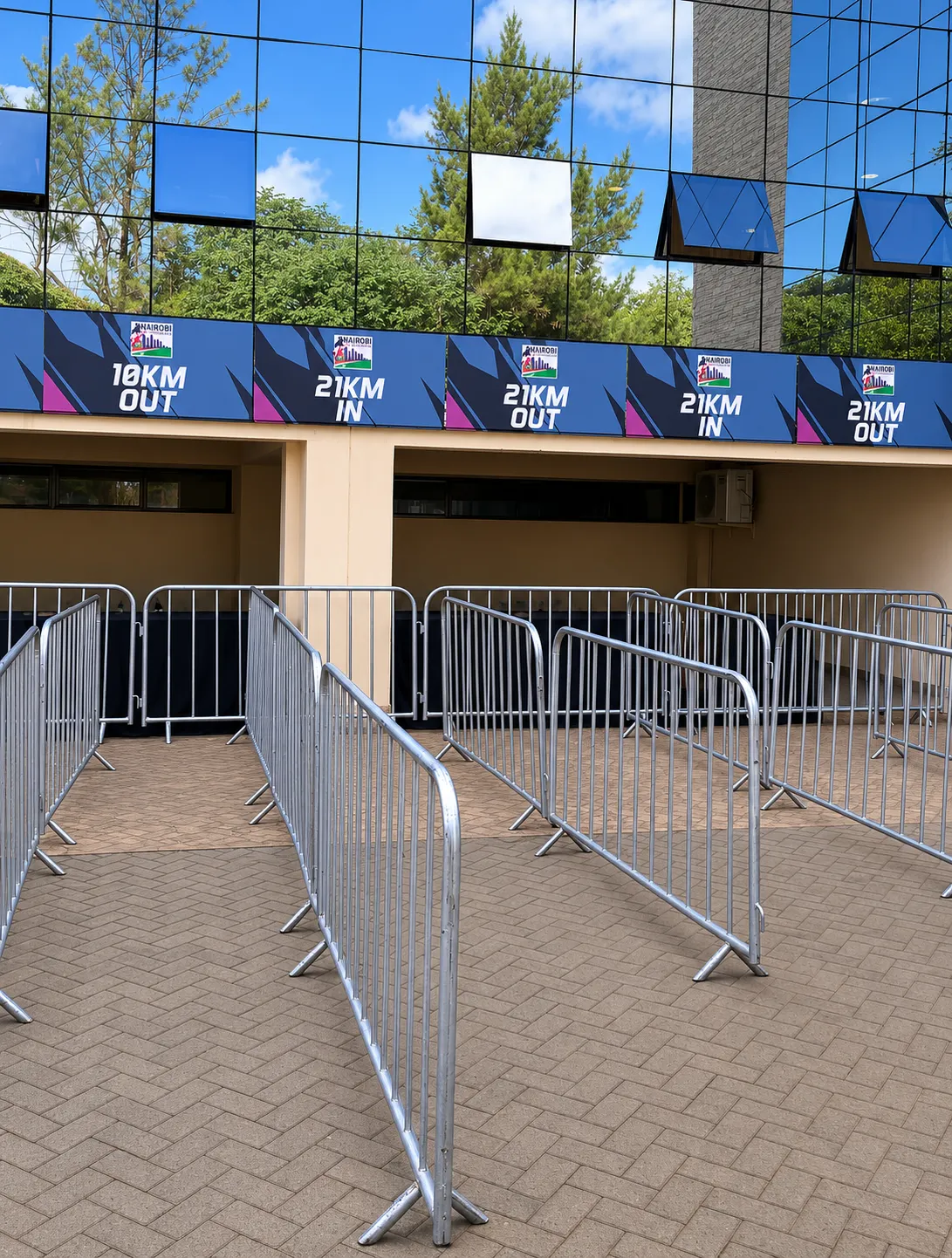
The start line of the Nairobi City Marathon is something else entirely.
Thousands of people, all in one place, all moving toward the same thing. I stood in the lineup and looked around. There were seasoned runners, the kind you can spot immediately: lightweight shoes, no excess gear, that particular stillness of someone who has done this before. But there were also kids. Young children in race bibs, bouncing on their heels. There were elderly people, standing quietly, ready. And there I was, somewhere in the middle of all of it.
Picture this: you have spent four months walking. You feel fit. You feel prepared. And then you look to your left, and a seventy-year-old man is stretching his calves like this is a Tuesday morning routine. Something about that is both humbling and strangely encouraging at the same time.
The morning of the race, I went to the bathroom five times. As I walked out of the house, I still felt like I needed to go. The energy at the start line is loud and buzzing, everyone around you moving and chatting and warming up. And underneath all of that, quietly, your body is doing its own thing. Mine was convinced it needed a bathroom. It did not. I did not use one again until two hours after the race was done. My body was lying to me.
I put my AirPods in, hit record on both Strava and my watch, and stood there ready. An MC counted down over a speaker. Ten, nine, eight. And just like that, we were running.
Kilometre 3
Nobody warns you about kilometre 3.
The first two kilometres feel manageable. You are riding the energy of the crowd, the music, the adrenaline of finally being here after all the anticipation. Your legs are fresh. You are moving. You feel good.
And then kilometre 3 arrives.
My legs started to burn. Not a gentle discomfort. A real, specific burn that made me think: maybe I cannot do this. I had walked 10,000 steps a day for four months. I had done a 10KM walk and barely broken a sweat. And here I was, not even halfway through, wondering if I had made a terrible mistake.
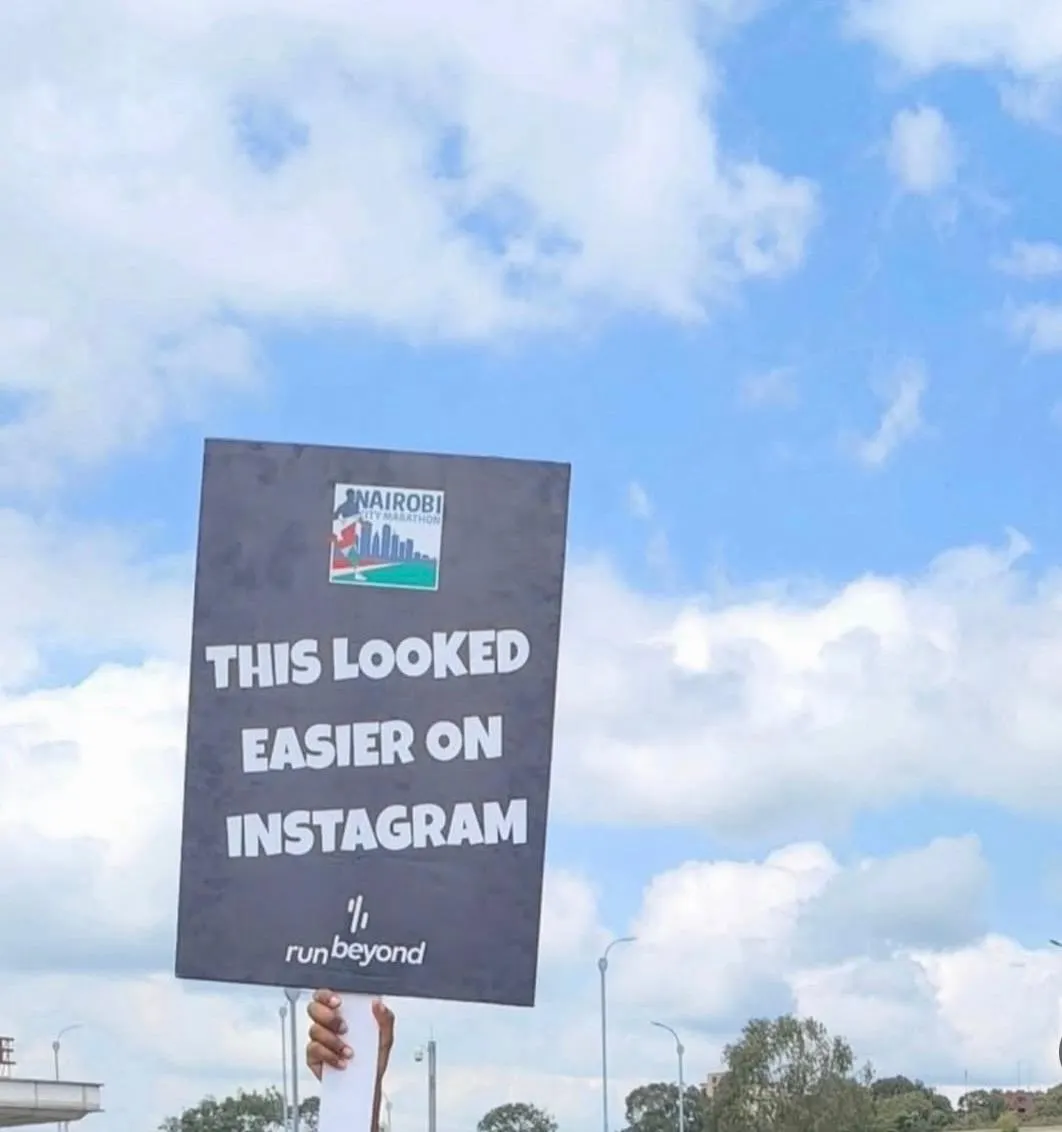
This looked easier on Instagram.
I kept going anyway.
The Shift
Here is what nobody tells you about hitting a wall: sometimes, you come out the other side.
Somewhere after kilometre 3, something changed. I cannot tell you exactly when it happened because it was not a single moment. It was gradual. I stopped fighting the run and started listening to it. I figured out my pace, not the pace I thought I should be running, but the pace my body was actually comfortable with. I learned when to sip water and when to hold off. I learned when to walk for thirty seconds and when to push through.
And the strangest thing happened. It got easier.
Not easy. But easier. The kilometres that should have been harder were somehow more manageable than kilometre 3. My breathing settled. My legs stopped screaming and started cooperating. I was not running like someone who had trained for this. I was running like someone who was figuring it out in real time, one kilometre at a time.
That is its own kind of preparation, it turns out.
By the time I could see the finish, I was not crawling toward it. I was moving with something that felt, if I am being generous with myself, like momentum.
The Numbers That Surprised Me
I did not expect Strava to be kind to me.
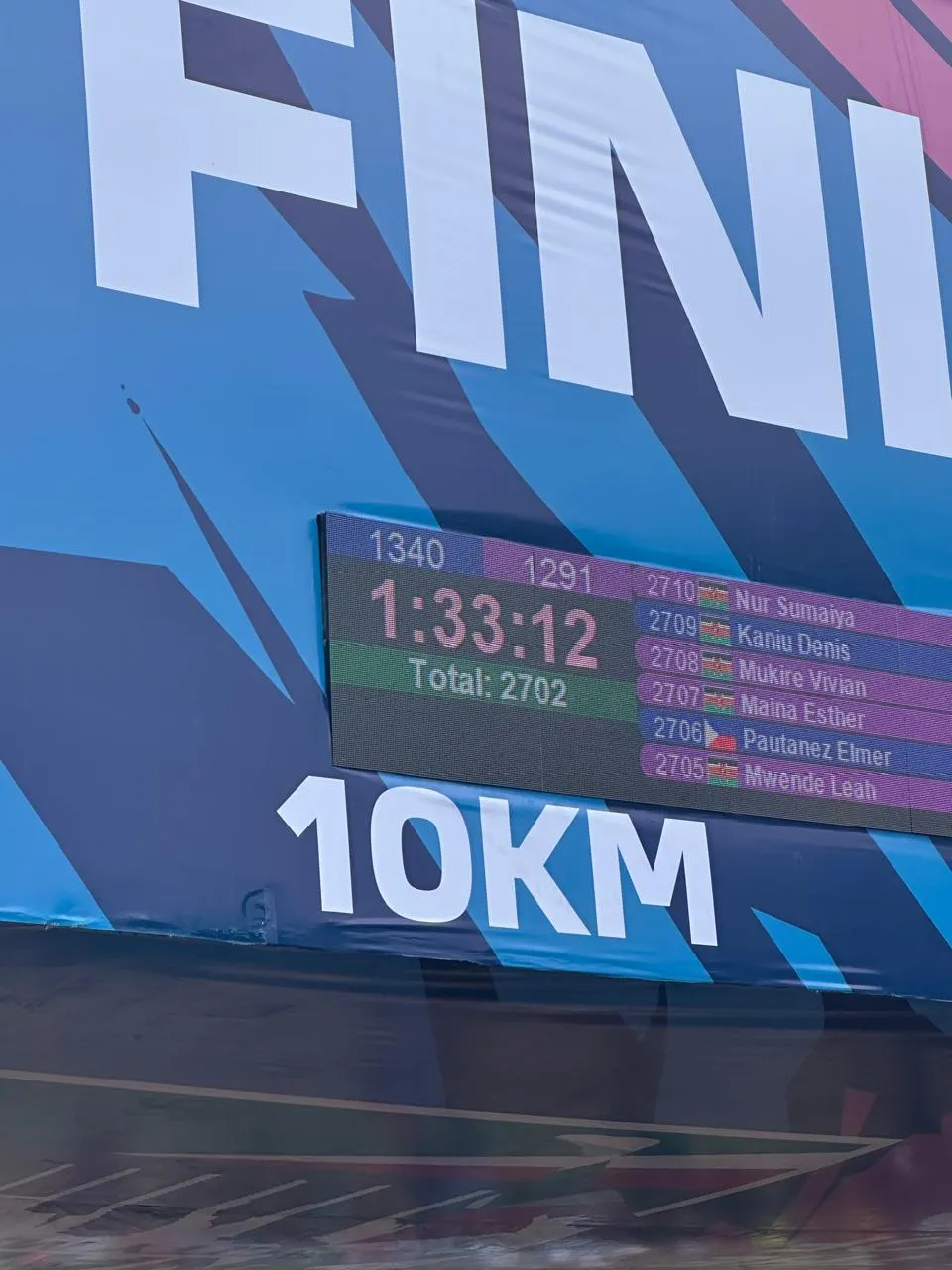
But let me back up. When I crossed the finish line, I did not check my watch immediately. I had made a deliberate decision during the race not to look at the time, I just wanted to run. So when I finally caught my breath and looked up at the scoreboard, it read 1:33:12. I stood there for a moment, genuinely surprised. That was better than I expected.
Then I opened Strava. And the numbers were even better than the scoreboard.
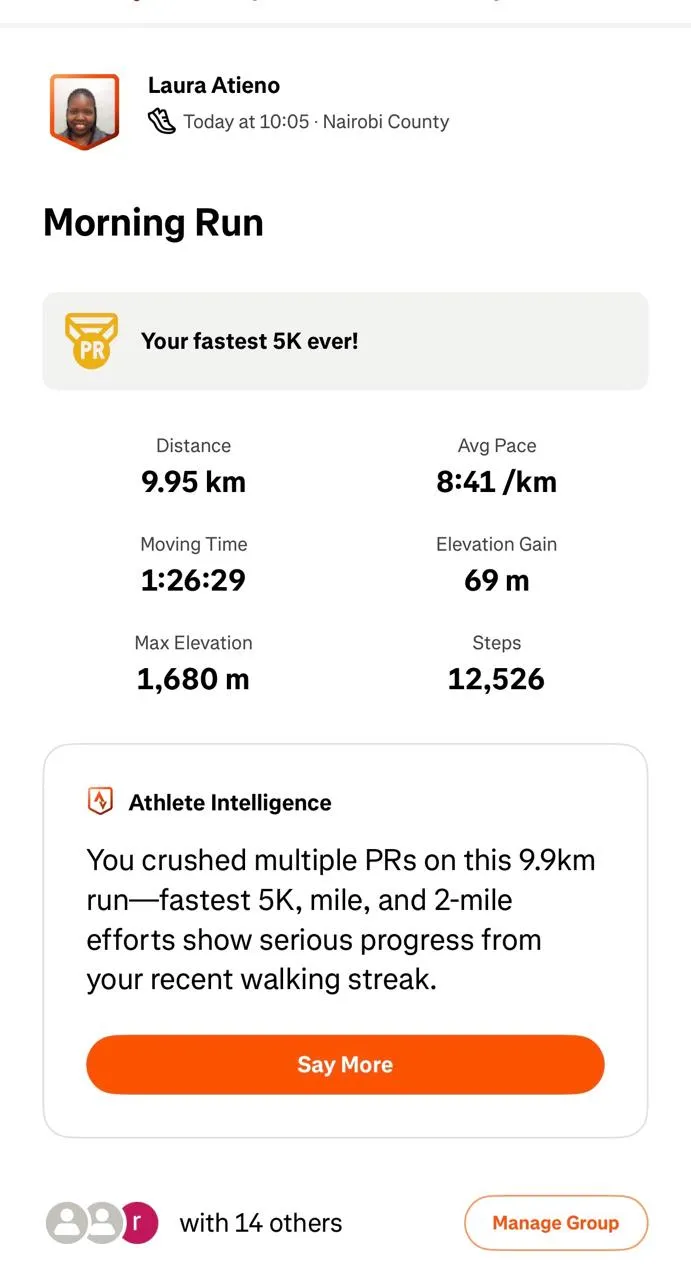
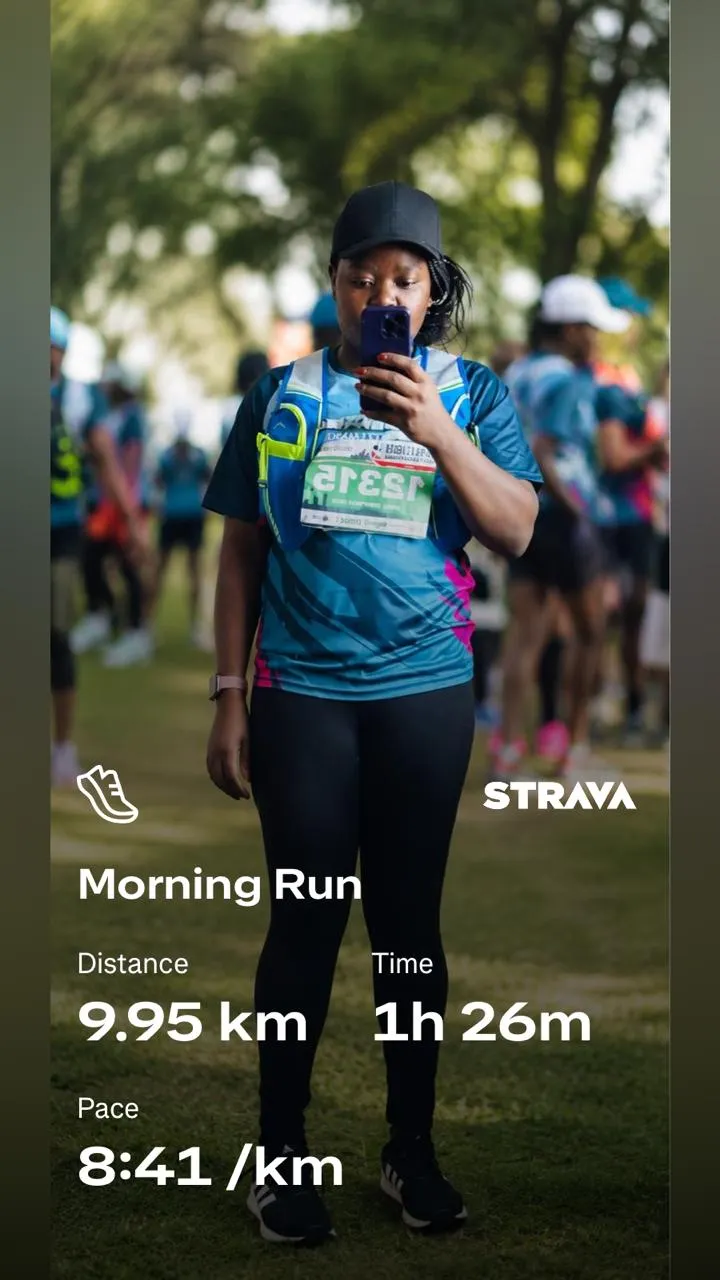
9.95 kilometres. 1 hour 26 minutes. A pace of 8:41 per kilometre. The difference between the two times is worth explaining: the scoreboard shows gun time, the clock that starts the moment the race officially begins. Strava tracks your actual moving time, from the second you personally start running. When you are in a field of thousands, those two numbers will never be the same.
And then this: my fastest 5K ever. Not my fastest 5K in a race. My fastest 5K, period.
Let me put that in context. On my regular morning walks, I cover 5 kilometres in about 62 to 63 minutes. Today, mid-race, I covered the same distance in 43 minutes. That is not a small difference. That is a different version of my body showing up entirely.
I sat with that for a long time.
The Athlete Intelligence feature on Strava told me I had crushed multiple personal records on this run: fastest 5K, fastest mile, fastest 2-mile. It called it serious progress from my recent walking streak. And I thought, yes. But also, imagine what actual running preparation could do.
Because here is the thing. I showed up undertrained and still set personal records. That is not an argument for skipping preparation. It is an argument for what consistent movement, even walking, builds in a body over time. The foundation was there. It just needed something harder to reveal itself.
When I signed up for this race, I had already mapped out the next one in my head.
The Stanchart Nairobi Marathon is Kenya's most popular running event, so popular that last year it sold out two months before race day. It is already open for registration, and my family group chat has been buzzing about it. One family member was urging everyone to register before it sells out. And I was quietly confident. I had been telling the family I would do the 21KM.
Then this week, before I had even run a single kilometre today, something shifted. My subconscious started sending warnings I could not quite name. The tune changed.
And now, on the other side of 9.95 kilometres, I can say it clearly: I am not ready for 21KM. Not yet.
Today taught me that running requires more from me than I had accounted for. So the new goal is simple. I want to get better at the 10KM first. Could I run it in under an hour at Stanchart? Maybe. The winner of today's race finished in 27 minutes, so clearly there is a wide spectrum of what is possible. I am somewhere on that spectrum, working my way along it.
I am already on TikTok looking for training tips. I have asked Claude for a customised running plan. And since I already spend one hour outdoors every morning, maybe that block becomes a run instead of a walk.
I am not ruling out 21KM. I just want to earn it first. And who knows: maybe next year's Nairobi City Marathon is where I find out if I have.
See you next year.