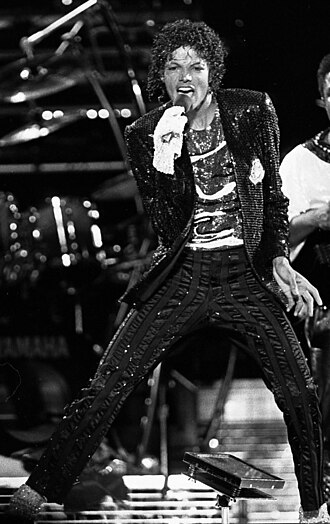
I had not thought about Michael Jackson in years.
Then one evening, while watching The Tonight Show Starring Jimmy Fallon, a face made me sit up straight. It stirred something in me, quietly at first, and then all at once.
The person being interviewed was promoting an upcoming movie titled Michael. I remember leaning forward and thinking, wait, is that his son? The cheekbones, the eyes, the way he carried himself.
I later learned it was his nephew, Jaafar.
But that moment of double-take was enough. I watched every variation of the trailer I could find, and by the end, I knew I had to see this movie.
Part of what drew me in was the format. You see, my favourite books are memoirs. What I love about memoirs is that they reveal the person behind what the public sees. The insider knowledge of the human being underneath the image. From the trailer, I could tell that Michael was that kind of story, and I wanted in.
The name Michael Jackson is not new to most of us. He is one of those rare celebrities who transcends generations. I mean, my mum is nearly sixty, and the other day, as I was telling her about the movie, she stopped me and said that growing up, Michael Jackson was her idol. She knew most of his songs word for word.
I was genuinely shocked, and then I was not, because I too have my favourites.
But as the years went by, my awareness of Michael Jackson narrowed to headlines. The skin. The allegations. And then, quietly, I stopped following him altogether. I will be honest with you. By the time he died, I had forgotten about Michael Jackson. I followed the news of his death for a while, the way you do when something huge happens in the world, and then I moved on.
Until that night on Jimmy Fallon. Until the movie.
I watched it, and something cracked open.
The movie made me go back in time. I started looking into Michael Jackson, old interviews, performances, and music I had not listened to in years. It started as a few days of casual curiosity. Then my algorithm noticed what I was doing, and it kept feeding me more. More interviews. More performances. More stories I had never heard. More stories I thought I knew but did not.
And then a few days became a week. And a week became three.
The first thing I searched was the story behind Billie Jean. And I want to be honest about why. I had always assumed that Billie Jean was one of Michael Jackson's former girlfriends, a woman he had wronged, and that the song was his very public attempt to clear his name. I loved the song, I always had, but it left a faint bad taste in my mouth. A celebrity dodging accountability, I thought. That was my quiet judgement, carried for years without question.
One search dismantled all of it. Billie Jean was not a former girlfriend. She was a stalker, a woman so obsessed with Michael that the story borders on the unbelievable. I had been wrong, completely and entirely wrong, for as long as I had known the song. And that single correction sent me looking at everything else I thought I knew.
The movie introduced me to incidents I was completely oblivious about. I had never heard of the Pepsi incident before. Not once. And yet there it was on screen, a moment so significant that it changes the entire shape of Michael's story. What stayed with me most was a scene where Michael refuses painkillers after the burn. I remember watching it and thinking, wait. Could it be that the dependency that would eventually cost him his life started right there, on a commercial set in 1984, with a fire he did not even know was happening?
I searched for it after the movie. What I found made me sit very still for a moment.
I read about his skin, the severe acne he battled as a teenager, and how it shaped his relationship with his own face long before the world started commenting on it. I watched the press conference he gave after the molestation allegations and felt deeply uncomfortable at how he was treated. I came across an interview where it was explained that his distinctive high-pitched voice was not entirely natural, that it was something he consciously held onto, a way of not letting go of his boyhood voice, of keeping some part of the boy alive inside the man.
And I listened, really listened, to his music again with completely different ears.
It was not just me either. The other day, while scrolling through Instagram, I came across a post that made me laugh out loud. Someone had shared a screenshot of their Instagram feed after watching Michael, and it was nothing but Michael Jackson wall to wall. Interviews, performances, fan edits, documentary clips. The caption said something like, well there goes my algorithm. I related to that because my YouTube did exactly the same thing for three weeks straight.
Three weeks. Past interviews. Old performances. Stories I had never heard and stories I thought I knew but did not.
Walk with me through what I discovered during those three weeks down the rabbit hole. And at the end of it, make your own conclusion. Adjust, if you need to, your picture of who Michael Jackson really was.
Michael Jackson's unresolved childhood is the architecture of everything that followed in his life, his genius, his fractures, and his death. And it did not end until he did.
The Boy on the Couch
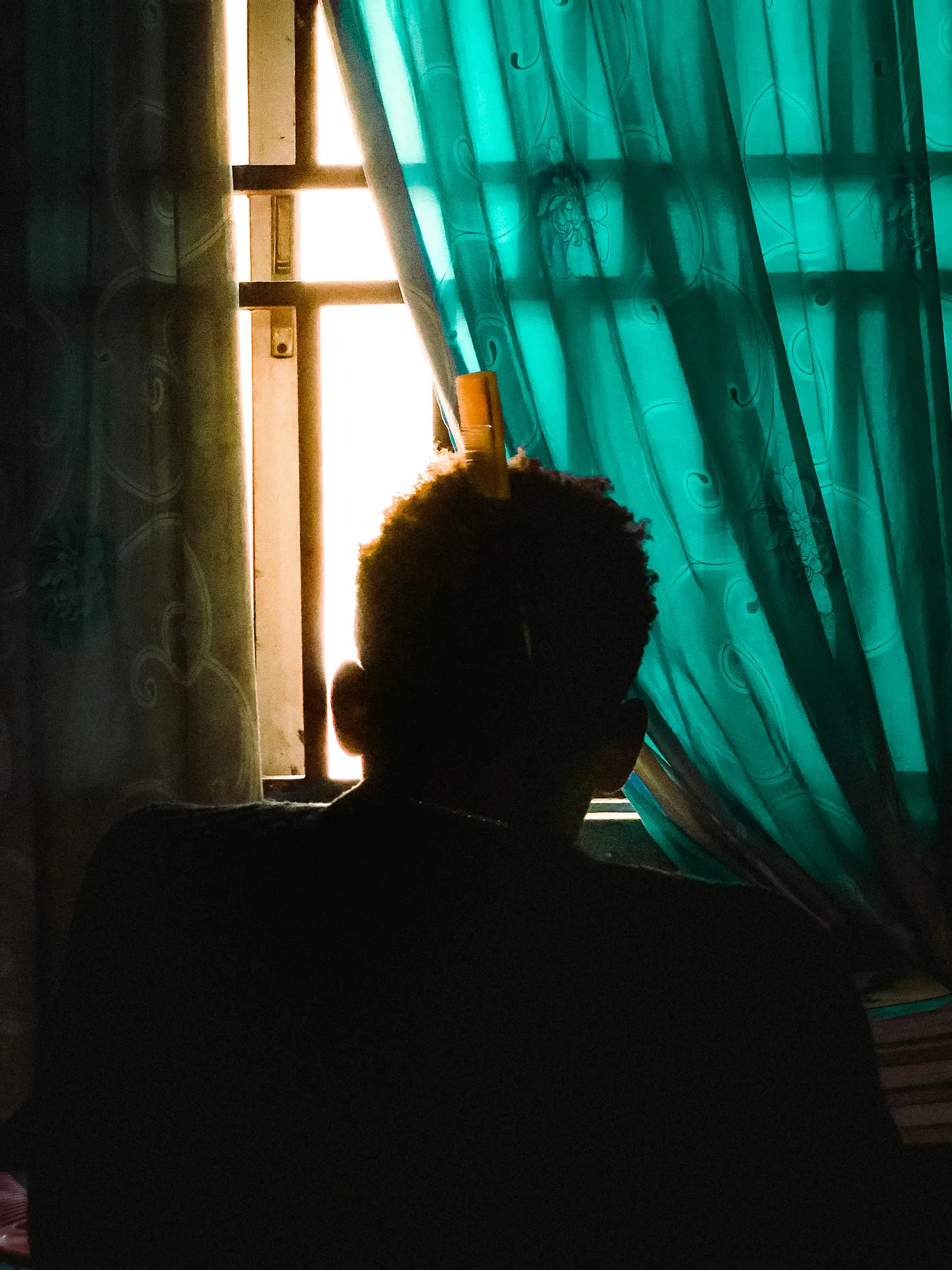
There is a scene early in the movie that I have not been able to shake.
A young Michael is sitting on a couch in the family living room. Through the window of his family home in Gary, Indiana, he can see other children outside, running, laughing, doing the ordinary things that children do. For a moment, he is just a boy watching other young boys and girls his age play. And then Joe calls him. Just like that, the window might as well not exist. Michael takes his place beside his brothers, and the rehearsal begins.
I keep coming back to that window. Not because it is dramatic. Because it is not. It is just a boy and a view he was not allowed to have.
Gary, Indiana, in the 1960s was a steel town caught between two worlds. It had been built on the promise of industry, full of jobs, full of transplants who had come from the South and from overseas looking for a better life. For a time, it delivered. But by the time Michael Joseph Jackson was born there on August 29, 1958, the cracks were already showing. The steel industry was beginning to decline, and as it did, white residents began leaving for the suburbs, taking their tax dollars with them. The people who remained, largely Black families, could not follow. As one longtime resident put it plainly: “Racism killed Gary. The whites left Gary, and the blacks couldn’t. Simple as that.”
This was the world outside Michael's window.
The house itself was at 2300 Jackson Street, a two-bedroom, one-bathroom home of 672 square feet. Joe had purchased it in 1950 for $8,500. Into that house eventually came nine children, plus their parents, Joe and Katherine Jackson. Eleven people in a space smaller than most studio apartments. You could not swing your arms without touching someone else's life.
And yet from that house, something extraordinary was being forged. Joe had recognised early that his children had talent, and he was not the kind of man to let talent sit idle. Rehearsals were mandatory. Play was not.
The window in the living room looked out onto a neighbourhood where other children had the freedom Michael did not.
When the Jackson 5 broke through in 1969, and the money started coming in, that house on Jackson Street was left behind. By May 1971, the family had moved to the Hayvenhurst compound in Encino, California, a two-acre property with five bedrooms, seven bathrooms, and enough space to breathe. A home now valued at four million dollars.
From 672 square feet to two acres. From Gary to Encino. From a window you could only look through to a compound with room to get lost in.
For a Black family in America in 1971, that move was not just upward mobility. It was a crossing of a line that most people in Gary never got to cross. Could it be that all of this was built on the voices and the talent of a group of young boys, the youngest of whom was barely twelve years old?
You have to wonder. Did the house change? Or did the boy just get further from the window?
Joseph
Within the first few scenes of the movie, Joe Jackson comes across as the villain. Frankly, I disliked him from the get-go. He pushed those boys hard, relentlessly, and Michael, being the youngest, made it especially difficult to watch.
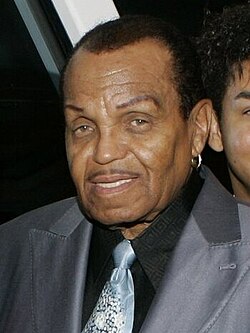
But as the story progressed, something shifted in me too. There is a moment where Joe speaks about working the steel mill his whole life, about the grinding reality of that existence, about not wanting his children to inherit the same fate. And in that moment, I understood him, even if I could not excuse him.
So before we go further, I want to hold both of those things at once. Because this story does not work if Joe is simply the villain. And I do not think that is entirely true.
Joe Jackson grew up with dreams of his own. He trained as a boxer. He played guitar in a blues band, chasing the kind of success that seemed always just out of reach. Neither pursuit took him where he wanted to go. Eventually, life took over, the way it does, and he ended up in Gary, Indiana, working as a crane operator at US Steel, supporting a growing family in a house that was getting smaller by the year.

He kept his guitar, though. Right there in the house. But it was not for anyone else to touch. That guitar sat in that home as a reminder of the man Joe had wanted to become, locked away from the children the way his dreams had been locked away from him. Could it be that what he could not pursue for himself, he decided his children would pursue for him? And could it be that in doing so, he never stopped to ask what it would cost them?
When Joe noticed that his sons had musical talent, something shifted in him. Maybe he saw a way out. Not just for himself, but for all of them. And so he did what he knew how to do. He pushed. He drilled. He demanded perfection at every rehearsal. He did not raise musicians. He engineered them.
What the movie captures, and what the documented record confirms, is that Joe's methods were harsh by any measure. Michael wrote about it himself in his 1988 autobiography Moonwalk. “We'd perform for him, and he'd critique us. If you messed up, you got hit, sometimes with a belt, sometimes with a switch.”
In a 1993 interview with Oprah Winfrey, Michael spoke about the fear of his father, a fear that never fully left him. “I just remember hearing my mother, Katherine, scream, Joe, you're gonna kill him, you're gonna kill him, stop it. I was so fast he couldn't catch me half the time, but when he would catch me, oh my God, it was bad. It was really bad.”
Joe also repeatedly told Michael he had a fat nose. I want you to sit with that for a moment. A boy being told his face was wrong by the one man whose approval he needed most.
But of everything Joe did and did not do, there is one detail that stays with me above all the rest. Joe did not allow his children to call him Dad. Not Daddy. Not Papa. Joseph. That was the rule.
Michael spoke about it years later with a rawness that is hard to sit with. “He didn't want us to call him Daddy, and I wanted to call him Daddy so bad. He said, I'm not Daddy, I'm Joseph to you.”
His sister Janet Jackson, herself a globally renowned pop star who grew up in the same household, confirmed the same. She tried it once. Once was enough.
Joe's own explanation for this was straightforward. He said he did not much care what they called him, as long as they listened to him and made something of their lives. He was thinking about their future. Michael just wanted a word.
A single word that most children say before they can even form a proper sentence. And he was told no.
Think about what it costs a child to grow up unable to call his father Daddy. Not because the man was absent. But because the man was right there, and still unreachable.
There is a moment during that same 1993 Oprah Winfrey interview that I keep returning to. Michael is speaking openly about the difficulty of his childhood, about the fear, about the pain. And in the middle of it, almost without realising, he stops and says, “Please, don't be mad at me, Joseph.”
Oprah noted it immediately. A grown man, the most famous person on earth at that point in time, instinctively apologising to his father in the middle of a live television interview. Still afraid. Still careful. Still calling him Joseph.
Now, here is what I want you to hold alongside all of that. Michael, for all the pain, never fully closed the door on his father. In Moonwalk, he wrote, “I have begun to see that even my father's harshness was a kind of love, an imperfect love, to be sure, but love nonetheless.” And in a quieter moment, he said, “I just wish I could understand my father.”
Not I wish he had been different. Not I wish he had never hurt me. I wish I could understand him.
Joe Jackson died in June 2018 at the age of eighty-nine. Whether the two men ever fully found each other across that distance, I honestly do not know. What I do know is that Michael spent his whole life reaching back toward something Joe had decided, early on, not to give. A word. A hug. A name. Just Daddy. That was all.
The Boy Who Carried Everyone
Here is something I did not fully appreciate until I watched the movie.
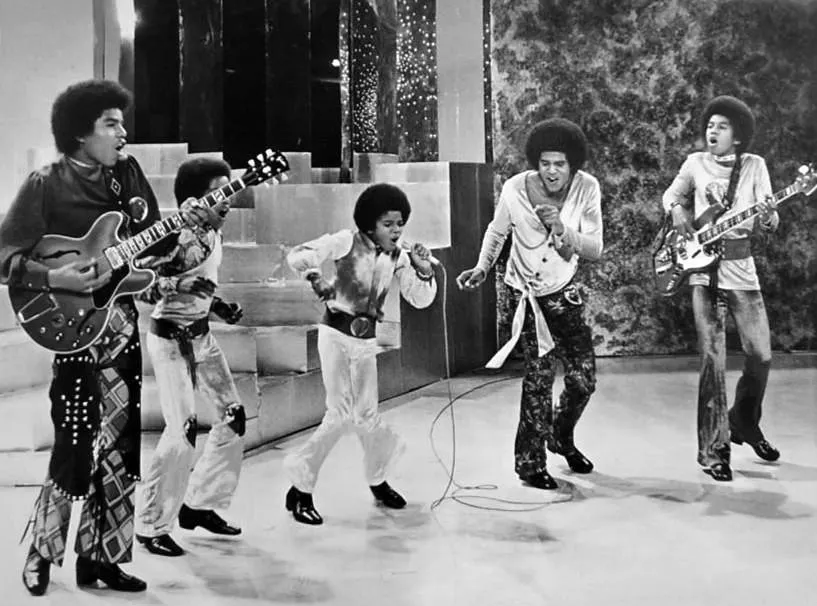
Michael Jackson was not just a member of the Jackson 5. He was the engine. The lead voice on virtually every song, the one the cameras found first, the one the crowds screamed loudest for. Not the oldest. Not the most experienced. The youngest. And yet the weight of the whole group's success rested largely on his voice.
So how did it all begin? In 1969, the Jackson 5 signed with Motown Records, one of the most iconic music labels in American history, and the success was immediate. “I Want You Back.” “ABC.” “The Love You Save.” “I'll Be There.” If you grew up anywhere near a radio in the early 1970s, you know these songs.
Did you know that by the time those records were climbing the charts, Michael had already left school entirely? He was eleven years old. No more classroom. No more playground. No more ordinary Tuesday mornings. In their place came a private tutor named Rose Fine, who travelled with the brothers and taught them three hours a day, wherever in the world they happened to be.
But it was what happened after the lessons that tells you everything. Michael later recalled that after performing for thousands of screaming fans, he would run straight to Rose Fine's hotel room. “We'd read and have warm milk,” he said, “and I needed that so badly. She would always say to me, the door's open.”
A boy who had just brought an entire arena to its feet, running to an old woman's hotel room for warm milk and a book. If that does not tell you something about what he was missing, I do not know what does.
And then there were the comic books. The movie shows it in a quiet moment on the tour bus, somewhere between one city and the next. Not music charts. Not contracts. Comic books. Deep down, underneath the sequined glove and the perfectly rehearsed steps, a child was still in there, holding on.
Michael himself described what that life looked like in a 2002 Gold magazine interview. “I grew up onstage. I grew up in nightclubs. When I was seven, eight years old, I was in nightclubs. I saw striptease girls take off all their clothes. I saw fights break out. I saw people throw up on each other. I saw adults act like pigs.”
Read that again. Seven years old. In nightclubs.
One of the scenes that touched me deeply was a quiet studio moment between a young Michael and Berry Gordy, the founder of Motown Records, the man who had signed the Jackson 5 and launched them into stardom. In the scene, Joe interrupts and tells Michael to stop bothering this important man. And then Michael hugs Gordy.
I sat with that hug for a minute. Berry Gordy is documented to have done something Joe never did. He organised baseball games and pool parties for the Jackson brothers when they were on the road. Simple things. The kind of things children do. Joe had actually forbidden his sons from playing sports back in Gary, worried it would jeopardise their careers. Gordy handed them a bat and told them to play.
Could it be that a man who let you play baseball, who made space for you to be a boy even for an afternoon, felt like something entirely different to Michael than what he had always known at home? I cannot say for certain. But that hug in the studio tells you something. A boy does not hold on like that for nothing.
What is not up for debate is what Michael himself said about his childhood. In 1993, accepting the Grammy Legend Award in front of millions of people, he stopped and said this. “My childhood was taken away from me. There was no Christmas, there were no birthdays. It was not a normal childhood, nor the normal pleasures of childhood.”
Not a normal childhood. Nor the normal pleasures of childhood. He was thirty-four years old when he said that. Standing on one of the biggest stages in the music industry, surrounded by peers who had spent decades admiring him. And the thing he wanted the world to know, in that moment, was not about the records or the awards. It was about what had been taken.
The boy on the tour bus with his comic books never really left. He just got harder to find.
The First Time He Chose
For most of his life up to this point, Michael Jackson had not chosen much.
He had not chosen Gary, Indiana. He had not chosen the rehearsals or the belt, or the name Joseph. He had not chosen to leave school at eleven or to spend his childhood in nightclubs while other boys his age were building tree houses. Even his talent, extraordinary as it was, had been spotted, extracted, and pointed in a direction by someone else before Michael was old enough to have an opinion about it.
And then, in 1978, something changed.
Michael was cast in The Wiz, a musical fantasy film featuring an all-Black cast, where he played the Scarecrow alongside Diana Ross. It was on that set that he met a man named Quincy Jones, one of the most celebrated music producers and composers in American history. And what Michael did next tells you everything about who he was becoming. He went looking for him.
Not Joe. Not a manager. Not someone who had been assigned to him. Michael Jackson, still in his early twenties, tracked down Quincy Jones and said directly, “I need you to help me find a producer. I'm getting ready to do my first solo album.”
Think about that for a moment. This was a young man who had spent his entire life being told what to do, where to stand, what to sing, and who to be. And here he was, for perhaps the first time, walking toward something entirely of his own choosing.
It was not without its complications. The movie shows us that before Michael could pursue his solo ambitions, he needed Joe's approval. He was caught, as he so often was, between loyalty to his family and the pull of his own artistic identity. Permission was granted, but only for work done after hours, after the obligations to his brothers had been fulfilled. Even freedom came with conditions.
But here is what matters. He took it.
When Epic Records pushed back and told Michael that Quincy Jones was too jazzy for the project, Michael did not back down. He went back to the label and said, “Quincy's producing the album.” Full stop. No negotiation.
For a young man who had grown up unable to say the word Daddy, who had rehearsed until his body gave out because saying no was not an option, this was not a small thing. This was enormous.
The result was Off the Wall, released in 1979. Ten songs chosen to showcase the full range of what Michael could do. Not what Joe thought he should sound like. Not what a record label expected from a young Black artist. What Michael himself wanted the world to hear.
The album was a massive commercial and critical success, though the music industry's rigid ideas about race and genre kept it from receiving the full recognition it deserved. The Grammys pigeonholed it into R&B categories, failing to nominate any of its hits for the top awards. Rolling Stone passed him over for a cover story, citing concerns that Black artists on covers did not sell copies.
Michael's response to all of that? “Just wait.”
Two words. And he meant every syllable.
What came next was Thriller, released in 1982. Quincy Jones described their shared ambition simply. They wanted every song to be an undeniable hit across every genre, rock, adult contemporary, R&B, and soul all at once. The album received eight Grammy Awards and became the best-selling album of all time, a record it still holds today.
But for me, the music is almost beside the point here. What matters is what Quincy was that Joe could never be. Not because Joe was a bad man. We have already sat with that complexity. But because Quincy gave Michael something Joe did not know how to give. He gave him room. Room to choose his sound, back his instincts, fight for his vision, and be heard when he pushed back.
Berry Gordy had let him play baseball. Quincy Jones gave him the keys to his own voice. Joe built the machine. Quincy showed Michael he was allowed to drive it.
Just wait. Two words from a young man who had spent his whole life being told to hurry up, fall in line, and be what everyone else needed him to be. He was done waiting.
What the Wound Built
By the time the 1980s arrived, Michael Jackson was the most famous person on earth. Thriller had sold more copies than any album in history. His face was everywhere. His talent was undeniable.
By any external measure, he had made it. He had escaped Gary. He had escaped the rehearsal room. He had escaped the belt and the switch and the name Joseph.
Except he had not. Not really.
Because here is what wounds do when they are not healed. They do not disappear. They find new shapes. They show up in the body, in the choices we make, in the things we build, and in the things we cannot let go of.
What followed the peak of Michael Jackson's career was not a simple story of decline. It was the story of an unhealed childhood finding every possible way to make itself known.
The Body That Was Never His Own
On January 27, 1984, Michael Jackson was filming a television commercial for Pepsi Cola at the Shrine Auditorium in Los Angeles. During the sixth take, a pyrotechnic malfunction caused fireworks to ignite his heavily gelled hair. Second-degree burns to his scalp. Several surgeries. Skin grafts.
Here is the detail that stays with me. As the flames spread across his hair, Michael kept dancing. For a few seconds, he did not know he was on fire.
Medical treatment for the burns introduced prescription painkillers. What began as treatment for a genuine injury became, over time, a dependency that Michael struggled with for the rest of his life. Court records would later connect that 1984 burn directly to the events of June 25, 2009.
Now, the movie suggests that Michael took the Pepsi deal at least in part to please Joe. That is the film's reading, and I want to be honest with you that I cannot verify it as a documented fact. What I can tell you is that whether or not Joe had anything to do with that decision, the outcome was the same. A fire started on a commercial set in 1984. It never fully went out.
He kept dancing. He did not know he was on fire. I keep coming back to that image. Because in many ways, it is the whole story.
The Father He Could Not Escape
By the mid 1980s, Michael had achieved something that most people in his position never manage. He fired his father. Joe Jackson was removed as his manager, replaced by professional management that Michael himself chose.
Except the word fired makes it sound cleaner than it was.
What the documented record shows is this. Michael did not confront Joe directly. He had the paperwork prepared and sent home while he was not there. When the meeting finally happened, Michael brought an adviser with him because he could not face his father alone.
Think about that. The most famous person on earth. A man who had just overruled a major record label, who had sold hundreds of millions of records, who had performed for kings and presidents. And he could not sit in a room alone with his father.
Could it be that you can fire a manager and still not be free of the father? Could it be that some distances, no matter how much you achieve, simply cannot be closed by success?
The Childhood He Kept Trying to Build
In 1988, Michael Jackson built Neverland Ranch.
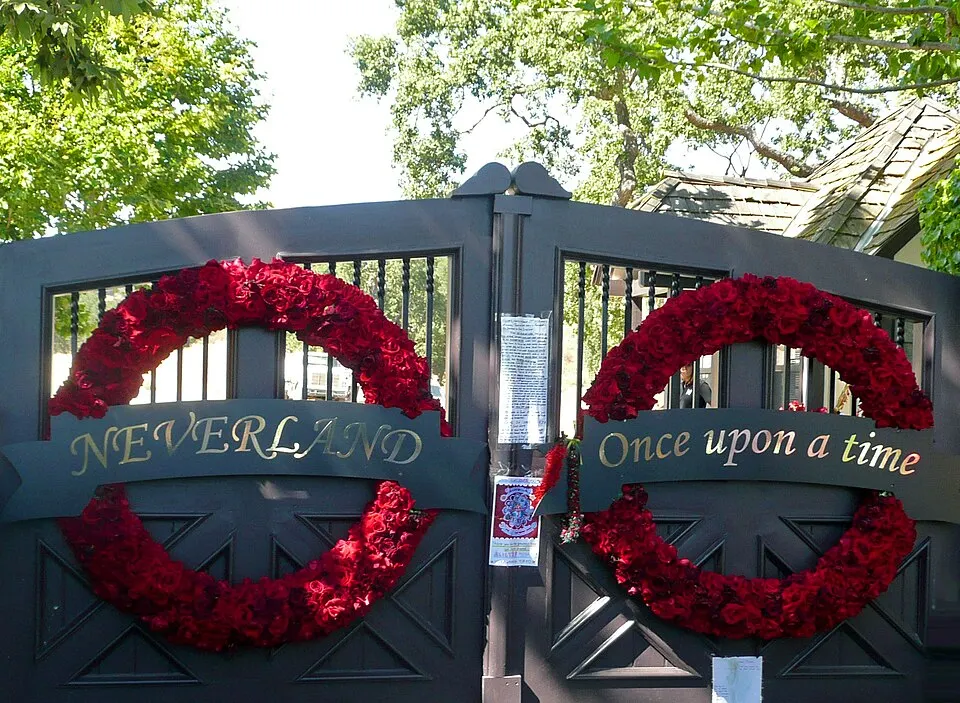
A two-acre estate in the Santa Ynez Valley of California, named after the fictional island in Peter Pan, a beloved children's story about a boy who refuses to grow up and whisks children away to a magical land where they never have to. It is worth noting that Peter Pan was reportedly one of the comic books Michael was fond of reading on the tour bus as a young boy, somewhere between one city and the next, holding onto the idea of a boy who never had to stop being one.
On the estate, he placed a zoo, an amusement park, a movie theater, a railway, and a flower clock. He invited children to come and play there freely.
When asked why he built it, he said this. “Because I wanted to have a place where I could create everything that I never had as a child. So you see rides. You see animals. There's a movie theater.”
The boy on the couch in Gary, Indiana, had grown up and built himself the window he was never allowed to open.
Neverland became the most visible symbol of everything the world could not quite make sense of about Michael Jackson. In 1993, allegations of child sexual abuse were made against him. The case was settled out of court. No criminal charges were brought, and Michael denied all wrongdoing. In 2003, he was arrested and charged. In 2005, after a fourteen-week trial, he was acquitted on all counts.
I am not going to ask you to reach a verdict here. That is not what this essay is about. What I will say is that Neverland, the place he built to recover what had been taken from him, became the place where everything unravelled.
And after the trial ended in 2005, Michael Jackson never returned to Neverland. Not once. He left behind the only childhood he had ever been able to build for himself.
In 2009, Michael announced a series of fifty comeback concerts in London called This Is It. Rehearsal footage from those final weeks shows a man who still had it. The moves. The presence. The voice. Whatever the years had taken, the artist was still there.
He never got to perform a single show.
On June 25, 2009, Michael Jackson was found unresponsive at his rented home in Los Angeles. He was pronounced dead at Ronald Reagan UCLA Medical Center. The cause of death was acute propofol intoxication, administered by his personal physician, Conrad Murray, who was later convicted of involuntary manslaughter. Michael Jackson was fifty years old.
He had spent his whole life trying to come back to something. In the end, he never made it.
The boy who was called away from the window in Gary, Indiana, never really stopped looking for a way back to it. He built it in Neverland. He chased it in music. He reached for it among the people around him. And when it was gone, when Neverland was gone, when the music had been complicated by everything that followed, when his body had been through more than any body should have to carry, he was still trying.
Fifty years old. Still trying to come back.
One More Thing Before You Go
I started this wanting to understand Michael Jackson. Three weeks and one essay later, I am not sure I fully do. But I understand something I did not fully grasp before.
The human condition.
We are all people with ambitions and dreams. We spend our lives chasing greater heights, and sometimes we reach them, and sometimes we do not. Michael Jackson showed us what happens when your wildest dreams actually come true. And what he showed us is that the journey is never a straight path. That sometimes the higher you rise, the more you have to carry. And that the weight of what you never dealt with does not get lighter with fame. It gets heavier.
I remember talking with someone after watching the movie and saying, you know, your family can both build you up and tear you down. Sometimes in the same breath. Sometimes by the same person.
Joe Jackson pushed his sons out of Gary, Indiana, and onto the biggest stages in the world. He also withheld the one thing his youngest son wanted most. Not money. Not opportunity. Just a name. Just Daddy.
And Michael, for all his genius, spent his whole life trying to find what that name would have given him. He looked for it in music. He built it in Neverland. He held onto it in his voice, that deliberate, careful high pitch he maintained long into adulthood, a way of keeping some small piece of the boy alive inside the man. The boy who sat on a couch in Gary, Indiana, and watched other children play through a window he was never allowed to open.
Think about what I said at the beginning. I carried a wrong assumption about Billie Jean for years. Quietly, without malice, without even realising it. A small judgement, lodged somewhere in the back of my mind, colouring the way I heard a song I actually loved. One search. One minute of curiosity. And it was gone.
How many other stories are we carrying like that? About people we think we know. About the celebrities we judge from a distance. About the complicated human beings behind the headlines we half-read and the songs we half-understood.
But it does not stop there. What about the coworker you wrote off after one bad interaction? The neighbour you formed an opinion about without ever having a real conversation? The family member whose behaviour you have always explained away without ever asking what shaped them?
We are all, every one of us, carrying a story that the people around us have only half read.
The ancient philosopher Plato once said, “Be kind, for everyone you meet is fighting a hard battle.” I do not think he had Michael Jackson in mind when he said it. But I think Michael Jackson is exactly who he was talking about.
Behind the moonwalk and the sequined glove and the voice that stopped the world, there was a boy who never got to play. A boy who wanted to call his father Daddy and was told no. A boy who ran to an old woman's hotel room after stadium shows because he needed warm milk and someone to leave the door open for him. A boy who built a ranch called Neverland because the only way he could think to get his childhood back was to build it himself.
We can disagree about many things when it comes to Michael Jackson. The world certainly has. But I hope that after walking this road with me, you might hold his story with a little more curiosity and a little less certainty. I hope you might extend to him, and to the complicated people in your own life, a little more of what he himself never quite received.
Kindness. Grace. Room to be human.